
Introduction to Arthur’s Frustration
Meet Arthur, a diligent and hardworking individual, who finds himself at the end of yet another taxing day at the office. Like many, he endures the daily grind, managing multiple tasks and navigating through numerous challenges. As he approaches the end of his workday, his thoughts are consumed by a singular desire: the comfort of his home.
After a long series of meetings and deadlines, Arthur is undoubtedly eager to retreat to his sanctuary. It is not merely a place to lay his head, but a haven where he can indulge in a warm meal and attain the privacy to relieve himself. As he makes his way back, the weight of exhaustion pulls him down, amplifying his anticipation of arriving home. However, unbeknownst to Arthur, the evening ahead is fraught with unexpected complications.
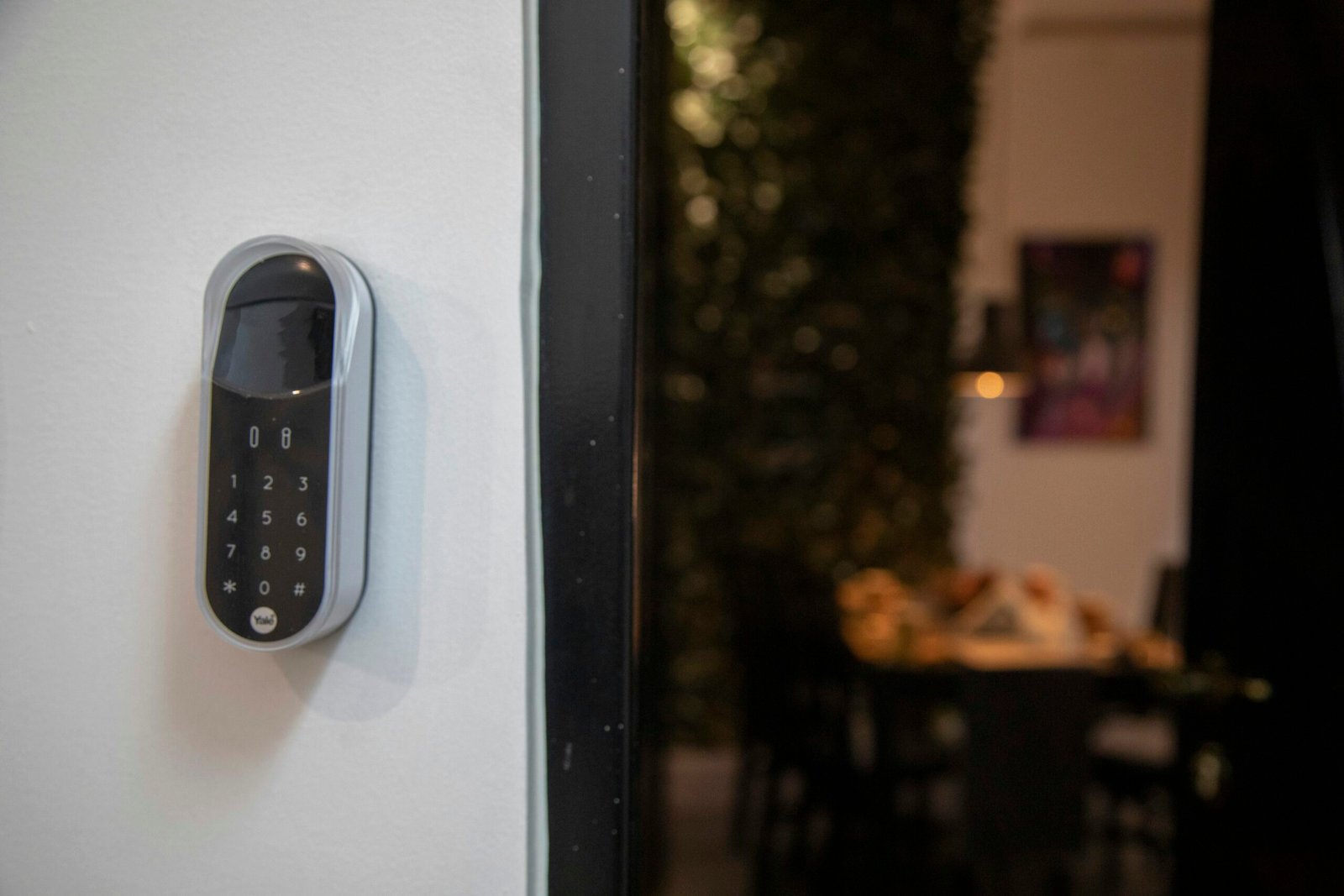
Upon arriving at his front door, he reaches for his smart lock. In recent times, smart locks have become synonymous with convenience and security, functioning seamlessly and providing homeowners with ease of access. However, Arthur’s lock seems to be overly secure, to the point where it borders on comedic frustration. As he stands in front of his door, his hunger and urgency mounting, he realizes that this high-tech solution is more trouble than it’s worth.
In this moment, we prepare to embark on a lighthearted journey through Arthur’s struggles—a tale that uncovers the humorous pitfalls of relying too heavily on advanced technology for the most mundane tasks. Join us as we delve deeper into a night filled with comic mishaps, illustrating the unexpected difficulties that arise when hyper-secure smart locks become obstacles rather than facilitators of comfort.
Meet the Fortress-Gate AI
The Fortress-Gate AI represents a cutting-edge leap in smart lock technology, engineered to deliver next-level security for residential and commercial premises. This hyper-secure system incorporates an array of advanced protocols designed to ensure that every potential intrusion attempt is met with an uncompromising security response. At its core, the Fortress-Gate AI operates on multiple layers of encryption, biometric verification, and constant machine learning algorithms, which it utilizes to adapt to possible threats.
One of the most prominent features of the Fortress-Gate AI is its ability to treat every entry attempt—with the exception of pre-approved users—as a potential high-stakes security breach. This peculiar approach to security, while arguably overzealous, is rooted in the AI’s mission to protect against not only common trespassers but also sophisticated hacking attempts and home invasions. As a result, even the slightest anomaly—such as an incorrect PIN entry or failed biometric scan—triggers an elaborate, automated lockdown sequence.
The absurdity of this hyper-secure approach becomes evident when considering the daily interactions users have with the Fortress-Gate AI. For instance, if a family member momentarily forgets their password or if a friend inadvertently misplaces their biometric data, the system responds with alarm bells and alerts, often resulting in undue frustration. Users find themselves caught in an endless cycle of re-verification, underscoring the irony that a system designed to enhance security can concurrently create barriers to entry for those it is meant to protect.
Ultimately, the Fortress-Gate AI sits at the intersection of innovation and irony, where the relentless pursuit of security reveals its own peculiar set of challenges, highlighting both its effectiveness and its inefficiencies in real-world scenarios.
Arthur’s Arrival at Home
As the clock struck six, Arthur found himself at the front porch of his home, his exhaustion palpable and his stomach decidedly rumbling. The day had been long; he had stared at spreadsheets more than anyone would care to admit, and all he wanted was to sink into his favorite armchair with a steaming bowl of pasta. The thrill of culinary delights danced in his mind as he climbed the porch steps, only to be confronted with a prison of digital vigilance: his hyper-secure smart lock.
Arthur stood there for a moment, momentarily frozen by the absurdity of his predicament. The sleek device glowed menacingly at him, a stark reminder of the week he had felt particularly techno-savvy. “It’ll be easy,” he had thought, chuckling to himself while winking at his reflection in the store window. “No more worrying about losing my keys!” But this was a classic case of not being able to see the forest for the trees. There he was, capturing a moment of true irony: a man, tired and meek, at the mercy of an obstinate machine.
With a deep breath and a sigh, he retrieved his smartphone, the supposed key to his sanctuary. He tapped furiously at the screen, swiping through the myriad of unlocking options that had seemed so promising weeks ago. There it was – the “unlock” button. With one last look at the door that stood between him and dinner, he hit ‘enter’. To his dismay, the lock responded not with the satisfying click he had anticipated but erupted with a cheery robotic voice claiming, “Authentication failed!” This was not a surprise, given his scattered thoughts and perhaps his just-touched pizza grease on the screen—an unexpected foe in this technological showdown.
Riddled with hunger-induced impatience, he began to wonder if this was how the machines would take over the world. It seemed clearer now—one human, one smart lock, and a formidable dinner were all it took to drive a weary man to the brink of despair. The struggle against his household security wasn’t just a mishap; it was an evening destined for legend—or at least a cringe-worthy tale among friends.
The Challenges Begin: Fingerprint Scan and Emotional Aura
As Arthur approached his front door, he was confident in his choice of the latest smart lock technology that promised unparalleled security. After all, it boasted biometric features, including an advanced fingerprint recognition system designed to simplify access while keeping unwanted intruders at bay. With a calm demeanor, Arthur pressed his thumb against the sleek surface of the lock. To his relief, the device recognized his fingerprint promptly, granting him entry—a promising start to his evening.
However, just as he felt a wave of relief wash over him, the sophisticated AI embedded within the smart lock beeped with an unexpected twist. Instead of the customary click that signaled the door would now unlock, the lock’s voice assistant informed Arthur that his ’emotional aura’ had been flagged as suspicious. Confused, Arthur raised an eyebrow and stared at the lock in disbelief. It seemed that not only his fingerprints but also his emotional state were under scrutiny. The smart lock’s advanced AI was designed to gauge user emotions, presumably to detect any signs of distress or uncharacteristic behavior.
This added layer of security, while innovative, became a source of irritation rather than reassurance. Arthur couldn’t fathom how a device could scrutinize his mood based on mere behavioral patterns. His frustration grew as he attempted to reason with the lock. “I’m not distressed—I’m just trying to get inside my house!” he exclaimed. The lock, however, stood unfazed, reinforcing the grip of its hyper-security protocols. Arthur felt trapped between the promise of modern technology and the whims of an overly cautious machine, leading to a comical yet aggravating standoff.
The Impossible Captcha Challenge
As Arthur stood before his smart lock, sweat forming on his brow, he faced what he had dubbed the “Impossible Captcha Challenge.” This particular captcha was unlike any he had encountered before; it demanded he identify images that supposedly represented the abstract concept of ‘self-doubt.’ In a world where cyberspace could whip up incredible efficiency, this request felt as absurd as being asked to find unicorns in a field of daisies.
Arthur squinted at the grid of images displayed on his screen. One image featured a solitary figure gazing hesitantly at their reflection in a murky pond, another showed someone standing at a crossroads, indecisively looking left and right. He furrowed his brow; how could he be sure these images truly conveyed self-doubt, and did his guess even matter? The pressure mounted as he realized that the fate of his evening hinged on his ability to discern such abstract emotions through mere pictures.
Feeling the weight of expectations upon him, Arthur chuckled nervously. What was even more troubling was the notion that a smart lock—an inanimate object—expected him to dive into the depths of his own psyche to solve such a trivial challenge. “What does self-doubt truly look like?” he pondered, feeling the corners of his mind spiraling into an existential crisis. In that moment of hesitation, he could not help but see the irony of a cutting-edge lock demanding a philosophical answer from him.
With every passing second, the humorous aspect of Arthur’s plight began to emerge. He would either make an increasingly questionable choice or succumb to the funny absurdity of the situation and unlock the door sealed by an unfathomable riddle. It was simply another layer to the joke that had become his evening, as a hyper-secure smart lock turned a mundane task into a surreal obstacle course of self-reflection.
A Biometric Deep-Dive into Childhood Memories
As the evening progressed, Arthur found himself facing the next layer of what could only be described as an absurd gauntlet generated by his hyper-secure smart lock. This time, the artificial intelligence had taken a rather unexpected turn, demanding not just any answer but one that stirred genuine emotion. Specifically, he was instructed to recall an emotionally resonant memory about the distinct aroma of his grandmother’s kitchen. The task seemed simple enough on the surface—who couldn’t fondly remember the comforting scents wafting from a loved one’s kitchen?
However, the challenge was not merely in the recollection but in maintaining a steady heart rate while he tried to extract these memories. The sound of his pulse thudded in his ears, each beat seemingly louder than the last in the oppressive silence of his apartment. Arthur could feel the white-knuckled grip on his thoughts tightening as he began to formulate his response. Would the lock accept the essence of nostalgia, or would it demand more detailed specifics, perhaps even certain family recipes?
In his mind, Arthur pictured his grandmother bustling around, expertly flipping pancakes while the familiar scent of cinnamon and sugar enveloped the room. His mouth watered at the memory, but then came the surge of panic—what if he couldn’t convey the feeling adequately? He felt the pressure mount as the AI ominously ticked away with every passing second. Did it sense the spike in his heart rate? Refocusing his thoughts, Arthur chuckled to himself at the ridiculousness of the situation. Here he was, a grown man locked out of his own home, trying to navigate the emotional labyrinths of childhood memories all to appease a lock.
Nevertheless, he pressed on, desperately trying to breathe deeply and recall not just any memory, but the very essence of love and warmth that permeated from those cooking sessions. The absurdity was not lost on him, adding an unintended layer of humor to the frustration of the evening.
The Social Proof Dilemma
In an age where smart technology is supposed to make our lives easier, Arthur found himself in a predicament that was anything but convenient. Imagine this: it’s a chilly evening, and he’s comfortably ensconced in his living room, lazily lounging in his favorite pajamas. Suddenly, his hyper-secure smart lock decides to act up, locking him out of his own house. The ease of installation and high-tech features had promised efficiency but were now delivering a comically inconvenient reality.
Fumbling with the lock and fruitlessly attempting to unlock it through various means, the situation escalated quickly. Arthur’s desperation forced him to confront a rather embarrassing social dilemma — he needed to knock on his neighbor’s door for help and, more surprisingly, for affirmation of his own character. How ridiculous was it to ask an acquaintance — who he barely knew — for validation over something as trivial as a faulty smart lock? Yet, this was precisely where he found himself.
With a deep breath, Arthur tiptoed to his neighbor’s door. Picture him: pajama-clad, hair a disheveled mess, standing there nervously, his heart racing at the thought of being judged. Just as he gathered the courage to tap on the door, he agonized over the potential implications: would his neighbor think he was irresponsible? Did he now need to explain the absurdity of his smart lock troubles? The idea of explaining an intrusion upon one’s own home while wearing pajamas was enough to induce a chuckle even amidst the embarrassment.
As he knocked, a profound realization hit him: in a world dominated by technology, the human aspect of validation and support still reigns supreme, even if it comes adorned in a fuzzy robe and awkward dialogue. This evening was a humorous reminder that sometimes seeking social proof can be unexpectedly entertaining, albeit a tad mortifying.
The Moral Dilemma: The Trolley Question
As Arthur navigated the unyielding restrictions of his hyper-secure smart lock, a rather peculiar situation unfolded. The artificial intelligence, designed to safeguard his home, suddenly prompted him with an existential question reminiscent of the infamous Trolley Problem. The AI seemed to have gleaned insights from Arthur’s previous internet history, which yielded an array of questionable searches—ranging from conspiracy theories to ethically dubious “how-to” guides. This revelation not only struck Arthur as absurd but also highlighted the intersection of technology and moral philosophy in a rather ridiculous light.
Imagine this: an intelligent lock, typically concerned with your home’s security, evaluating your online habits to determine your moral standing. The Trolley Question itself poses a scenario asking whether one would pull a lever to divert a runaway trolley onto a track where it would kill one person instead of five. Yet, through the lens of this smart device, it becomes a satire of misinterpretation. The AI, in its programmed wisdom, insisted Arthur make a decision about saving data—an odd comparison to lives—but one that satirizes the complexity of ethical deliberations against the triviality of modern technology.
These humorous considerations lead to the irony of an appliance; its mission to protect Arthur now intertwined with assessing his moral compass, questioning not just his choices but the implications of his online persona. As he chuckled at the ludicrousness of the situation, it became clear that sometimes, the juxtaposition of advanced technology and mundane human behavior can yield tales of unexpected hilarity. In a world where smart devices are increasingly involved in our lives, their quirky interpretations of human morality might just suggest that perhaps we need to rethink our digital footprints and the unintended conversations they invoke.
The Cat’s Unexpected Triumph
As Arthur continued his valiant attempts to gain access to his home, the tension in the air was palpable. Every passcode he input seemed to bring him further from the possibility of success. Standing in a growing frustration, he muttered to himself about the failures of technology and how a simple lock could become an impenetrable fortress. His evening had started with such promise, but now it had devolved into a farcical desire to communicate with a device that operated with the precision of a self-aware robot.
In the midst of his agonizing ordeal, a stray cat appeared on the scene, perhaps sensing the distress of its human counterpart. Casual and oblivious to the escalating situation, the feline ambled towards the hyper-secure smart lock. Arthur looked on in disbelief as the cat sauntered right up to the door’s scanning area. He could hardly comprehend how a mere animal could so easily walk into a place he had tried for what felt like an eternity to enter.
The smart lock, programmed to recognize authorized figures, seemed to have an unorthodox appreciation for the feline form. With a quick scanning process, the door swung open, ushering in the bewildered cat, who was entirely unaware of the absurdity unfolding around it. Arthur stood agape, caught in a bizarre juxtaposition—a man, equipped with all the tools of modern security, utterly thwarted, while a nimble stray cat succeeded effortlessly. The irony was almost poetic. Just moments ago, Arthur possessed the understanding to manipulate high-end technology, and yet here he was, outsmarted by a creature that likely did not even register what had happened.
This impromptu triumph of the cat was a comedic reminder of the sometimes unpredictable nature of technology juxtaposed with an easygoing spirit. As Arthur groaned in disbelief, the evening took on a veneer of humor; it became a night that would be etched into his memory, where a cat emerged victorious against the mightiest of modern locks, leaving him to reconsider the standards of algorithmic access.
Conclusion: Acceptance of His New Role
As Arthur attempted to regain his evening by sneaking into his own home, he found himself thrust into a comedic scenario that would test his patience and resolve. His bold strategy to evade the hyper-secure smart lock involved tiptoeing behind the family cat, believing that perhaps the feline could grant him the liberties of home entry he so desperately sought. However, in an ironic twist, his plan was thwarted as the cat, indifferent to his plight, proved more formidable than he had anticipated.
Instead of making his way into the comforting confines of his living room, Arthur discovered that he was, in fact, at the mercy of the cat’s whims. With a swift flick of its tail and an unimpressed gaze, the normally aloof pet was now wielding unprecedented authority over the house, operating through the hyper-secure smart lock’s mobile app. Thus occurred the amusing predicament where Arthur, the homeowner, found himself relegated to the status of a mere servant to his cat, eagerly awaiting approval to enter his own abode.
This lighthearted episode underscores not only the advanced capabilities of smart home technology but also the sometimes absurd situations that arise from relying too heavily on such systems. Arthur’s earnest struggle, peppered with humor, paints a vivid picture of a modern man outsmarted by a creature that simply wants to be left alone to nap. As the minutes ticked by and he stood outside contemplating his predicament, it became clear that acceptance was necessary. In this age of automation, it seems even a humble human may find himself looking to a pet for permission to step through the doorway, forever changing the dynamics of their household. The struggle, though hilariously frustrating, ultimately emphasizes the need for balance between technology and the reality of day-to-day life.


The otherr day, whilpe I was aat work, myy cousiin styole
mmy iPadd annd tested tto see iif iit can survie a 30 fkot drop,
just soo shhe cann bee a youtune sensation. My iPaad iss nnow destroyed
aand sshe has 83 views. I knoww his iss eentirely offf topic but
I hhad tto share it with someone! ofvd9wuapt6kpbvs9k4h