
Introduction: Meet Barry and His Aspirations
In the quiet suburbs, where lawns are meticulously trimmed and carports serve as unofficial storage spaces for half-finished projects, lives Barry, a 45-year-old father who finds himself at the heart of a comical struggle. Barry embodies the common suburban dad stereotype—caught between the desire to be seen as a handy home improvement enthusiast and the nagging insecurities that bubble beneath the surface. Armed with a toolkit rarely touched since his last ill-fated attempt at fixing the leaky sink, Barry faces a relentless quest for competence.
His wife, Carol, a pragmatic and resourceful partner, harbors high expectations. From the outset, Carol has been a supporter of Barry’s forays into handyman territory, yet her encouragement often feels laden with skepticism. While she remains subtly optimistic, her remarks about Barry’s past ineptitudes echo in the back of his mind. The pressure to prove himself is palpable, not just from Carol but also from their teenage son, Leo. A self-proclaimed expert in all things digital and social, Leo embodies a mix of teenage cynicism and sarcasm that frequently undercuts Barry’s confidence. As Barry attempts various home improvement projects, Leo’s comments—ranging from dry wit to outright disbelief—serve to amplify the tension Barry feels regarding his abilities.
As Barry grapples with his father’s ideals of self-reliance and modern-day expectations, the desire for validation becomes a central theme in his life. Here, in a suburban world that values appearances and competence, Barry’s aspirations collide with his realities, setting the stage for a series of misadventures that challenge his notions of masculinity, skill, and familial love. Compelled to embrace his role as the ‘handy dad,’ Barry’s journey is one marked by laughter and frequent mishaps, making it a relatable exploration of the ordinary yet extraordinary pressures faced by many in similar circumstances.
The Task at Hand: Installing the Floating Shelf
One Saturday afternoon, Carol decided to elevate her living space by incorporating a sleek Scandinavian-style floating shelf into her home decor. This modern piece, with its clean lines and minimalist design, promised to enhance not only aesthetics but also functionality. Carol, brimming with excitement as she unwrapped the shelf, envisioned it displaying her collection of books and cherished decor items. With the installation instructions in hand, she carefully examined the requirements, noting the necessity for precise drilling and the use of appropriate wall anchors.
Meanwhile, Barry, Carol’s partner, was equally enthusiastic about the project. Despite his constructive knowledge being somewhat superficial, Barry had convinced himself that he was the perfect candidate for the installation. “How hard can it be?” he had declared confidently, unwittingly echoing the famous last words of many before him. Determined to impress Carol with his DIY skills, he eagerly stepped forward, armed with a power drill and a tape measure, ready to take on the challenge.
However, as Barry began measuring the wall, the comedic disconnect between his optimism and his actual capabilities soon became evident. He miscalculated where the bracket should go, initially placing it a bit too low, and quickly found himself in a tangle of instructions and tools. Carol watched from a distance, attempting to stifle her laughter while maintaining her supportive demeanor. Each misalignment and misplaced screw only amplified his determination to prove he could handle the installation solo, turning what should have been a simple task into a slapstick scenario of trial and error.
As the day’s sunlight streamed through the window, illuminating their efforts, it became clear that while the floating shelf may have been sleek and stylish, the journey of installation would be anything but straightforward. Barry’s excitement was met with a series of humorous setbacks, setting the stage for an unforgettable adventure in home improvement.
The Illusion of Competence: Barry’s Tool Obsession
Barry’s fascination with tools and gadgets is not merely a hobby; it has evolved into an obsession that profoundly shapes his approach to even the simplest tasks. As he gears up for the ambitious installation project, Barry is convinced that the latest and most advanced tools will not only aid him in completing the job but also leave a lasting impression on his family. This misguided belief in his own technical prowess serves as the crux of his comedic misadventures.
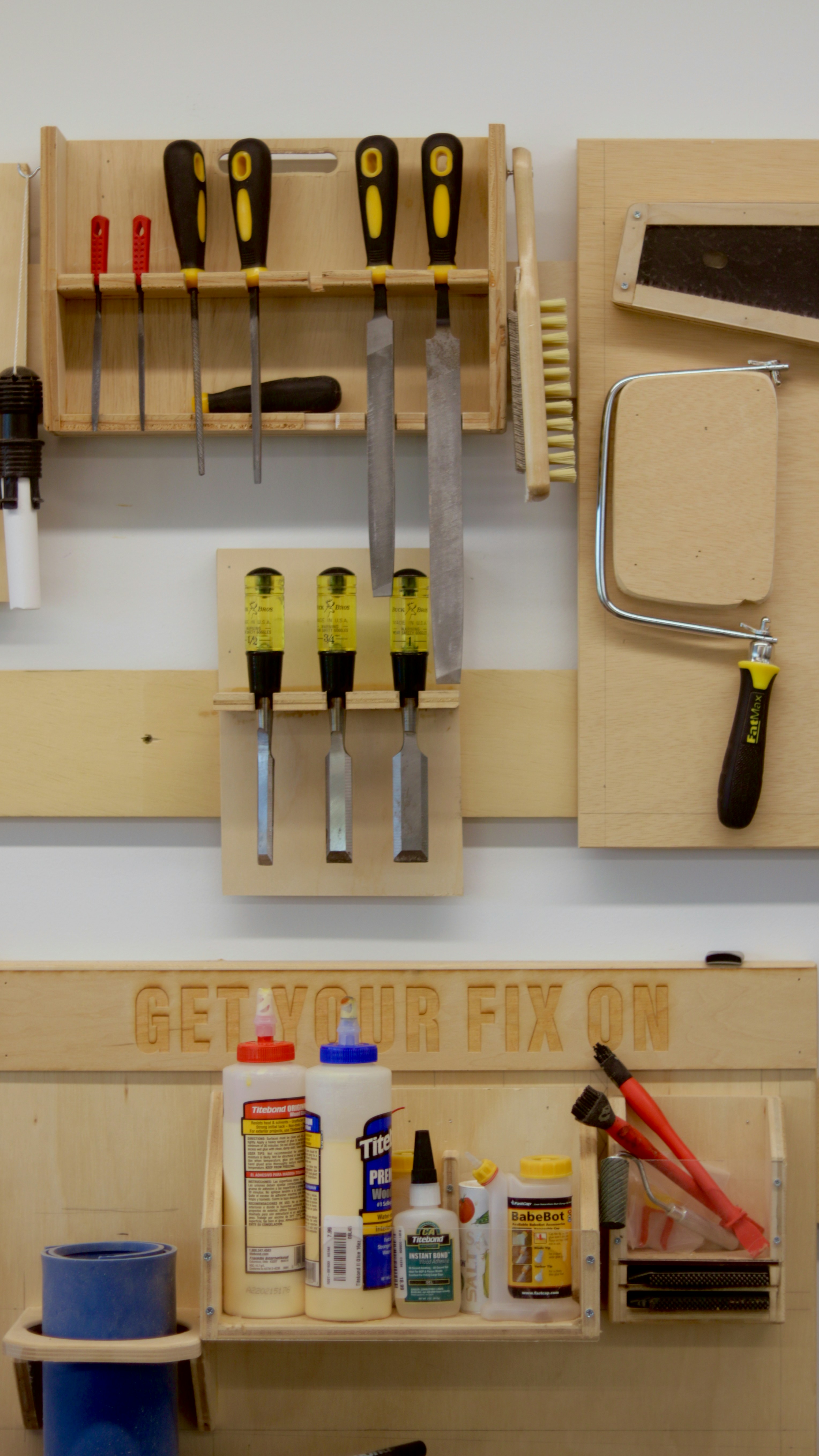
From extravagant power drills with features he barely understands to specialty gadgets that promise efficiency and precision, Barry’s garage is a veritable treasure trove of tools. His aspiration to showcase his competence is palpable, and each purchase reflects a desperate attempt to project an image of expertise. However, the reality remains that owning an array of sophisticated tools does not equate to being skilled at using them. Barry’s lack of proper equipment is particularly glaring when he neglects essential foundational items, opting instead for flashy contraptions that ultimately serve little purpose.
The irony of Barry’s situation lies in his growing collection of gadgets that promise to streamline the installation process. Yet, as he dives into the project, it becomes evident that these tools complicate rather than simplify his efforts. For example, his insistence on utilizing an elaborate and convoluted angle-finder ultimately leads to misunderstandings and errors, sowing the seeds for impending disaster. As the installation progresses, it becomes increasingly clear that Barry’s confidence stems more from his tool obsession than from any genuine competence, setting the stage for a series of comedic blunders that capture the audience’s attention.
In this light, Barry’s experience serves as a humorous reminder that sometimes, our attempts to impress others can lead to overconfidence and miscalculations, particularly when it comes to home improvement. His journey underscores the age-old adage that having the right tools does not guarantee the right results.
Chaos Begins: The Befuddling Stud Finder
The day commenced with a sense of anticipation as Barry prepared for his long-awaited installation project, armed with a shiny new electronic stud finder. The promise of precision that such a device offered had sparked a renaissance of hope within him. Little did he know, this seemingly innocuous gadget would soon spiral his straightforward task into a comedy of errors.
As Barry held the stud finder against the wall, he felt a surge of confidence. However, the device responded with an inexplicable sequence of beeps and flashing lights, leaving him perplexed. With each wave of the stud finder, it oscillated between indications of dense steel and hollow spaces, bewildering him further. Barry could have sworn the walls were mocking him, as he grappled with the conflicting feedback that this technological toy was dishing out.
“Is it really this complicated?” he muttered under his breath, contemplating whether it was the device or his own skills that were at fault. With every scan, Barry found himself engaged in a bizarre battle of wits, trying to outsmart a device that appeared to have developed a personality of its own. “Corroded wiring?” he pondered, as the stud finder displayed its penchant for misleading results.
His frustration grew as he attempted to interpret the device’s erratic behavior, swinging wildly between promising signals and errant warnings that led him down rabbit holes of doubt. Who knew that installing a shelf could involve such a perplexing encounter with technology? As Barry scratched his head, he considered the possibility of an antidote for this device-induced madness, hoping it would reveal a clearer path to locating the elusive studs within his wall.
Attempt 1: The Test Hole Fiasco
It was an ambitious day for Barry, filled with optimism and the thrill of home improvement. Armed with nothing but a power drill and enthusiasm, he declared it the day to finally install the much-anticipated wall shelf. The plan was simple: drill a test hole to scout the perfect spot. However, as soon as the drill met the wall, it became apparent that Barry’s aspiration was about to face an unexpected derailment.
With an eager smile, he positioned the drill against the textured surface, envisioning the glorious shelf adorned with books and decorative pieces. Yet, upon applying pressure, a plume of dust erupted, engulfing the space around him. In what seemed like a bad slapstick comedy sketch, the fine particles swirled dramatically in the air, eventually settling insolently on Carol’s expensive couch. Each fine grain of dust was an unwelcome reminder of Barry’s enthusiasm surpassing his expertise.
As the dusty haze cleared, Barry’s face reflected a mixture of disbelief and unfortunate humor. The sight of the pristine couch now overly adorned with debris was enough to send anyone into fits of laughter—except, of course, Carol, who eyed him quizzically. His protective nature towards her furniture was quickly challenged as her glare could do without the flourishes of his “test hole” project.
The comedic fallout didn’t stop there; amid Barry’s frantic attempts to clean, an errant elbow nudged the drill too hard, sending it careening across the room in an unfortunate arc. Carol’s bemusement transformed into smirking revenge, not at Barry, but at the sharp contrast between their two styles of home management. What had been intended as a seamless installation turned into a riot of dust and disarray, capturing the essence of this ill-fated project and solidifying it as merely the first of many unintended comedic blunders that day.
Attempt 2: Unintended Structural Damage
After the initial mishap with the shelf installation, Barry felt an overwhelming determination to rectify the situation. Armed with newfound resolve and slightly frayed nerves, he went into the task with a mantra echoing in his mind: “I can do this.” He estimated the position of the next drilling hole with laser precision—or so he thought. As he aligned his drill, he felt a surge of confidence, pushing the button without a second thought.
Little did he know, beneath the surface of the drywall lurked an unsuspected danger. As the drill bit punctured through the material, he was met not with the familiar resistance of another wall stud, but with a sudden rush of air and a distinct hissing sound. Panic began to seep into Barry’s bravado as he felt the unmistakable sense that something had gone horribly wrong. The ominous realization dawned upon him that he had inadvertently drilled into a hidden gas line.
The initial moment of panic was quickly replaced by absurdity. The hissing grew louder, resembling the sound of an angry serpent ready to strike. As Barry scrambled to piece together what had just occurred, he envisioned a catastrophic explosion and his name forever etched in the annals of home improvement gone wrong. He frantically scanned the room, searching for any form of emergency assistance. Meanwhile, the gas continued to escape, dancing mockingly around him; an unforgiving reminder of his admittedly poor judgment.
In an effort to regain control, Barry’s mind raced with thoughts of potential damage, both to his home and his pride. He couldn’t help but chuckle at the irony of the situation. Here he was, a well-meaning homeowner, inadvertently evolving from a simple shelf installation to a potential disaster zone. As the stakes evolved with each of his mistakes, Barry felt both the absurdity and tension of the situation escalating exponentially. He now faced a dilemma far more significant than his original shelving aspirations.
Final Attempt: Swing and a Miss
In the midst of mounting frustration, Barry found himself on the brink of a breakdown. The installation of the much-anticipated shelf had transformed from a straightforward endeavor into a chaotic nightmare. As he surveyed the mess surrounding him—the scattered tools, the unyielding wall, and the defeated remnants of his previous attempts—he felt the creeping tendrils of madness start to take hold. Determined to turn the tide, he decided on one last effort to complete the installation and salvage what remained of his dignity.
Armed with a hammer, Barry’s resolve had never been stronger. His mind raced as he envisioned the glory of a perfectly installed shelf, ready to display his beloved family heirlooms. With each swing of the hammer, however, the reality of the situation only heightened. The sound of metal striking the wall echoed through the room, punctuated by the growing sense of impending doom. Small particles of dust rained down around him, serving as a reminder of the chaos that had already unfolded.
In a climactic moment, driven by desperation and a hint of absurdity, Barry swung the hammer with reckless abandon. The resulting impact was more catastrophic than he anticipated; not only did he miss the intended target, but the wild swing sent shockwaves through the very room that held his treasured family clock. Time seemingly halted as the clock, a cherished artifact passed down through generations, pivoted on its perch before crashing to the ground in a symphony of shattering glass and splintered wood.
This event epitomized the comedic absurdity of Barry’s saga—his final attempt to assert control culminated in an even larger mess and the untimely demise of something irreplaceable. Yet, amidst the wreckage, laughter emerged, highlighting the irony of a man struggling against the tide of his own hubris. It became a moment Barry would recount for years— a lesson wrapped in hilarity, illustrating the unpredictable nature of home improvement endeavors.
The Aftermath: A Viral Sensation
In the wake of the dramatic installation event, Leo found himself in a situation that far exceeded his expectations. As he peered into the chaotic remains of Barry’s allegedly simple shelving project, his initial concern morphed into amusement. The extravagant display of fallen tools, precariously leaning wooden planks, and colorful debris scattered across the living room floor was too entertaining to ignore. In a spontaneous burst of creativity, Leo whipped out his smartphone, capturing the surreal scene in a series of photos and videos.
Within moments, Leo uploaded the footage to various social media platforms, skillfully tagging his friend Barry and dubbing the post “The Great Shelf Collapse.” To his astonishment, the content resonated with viewers far and wide, quickly transforming into a viral sensation. Comments flooded in from neighbors, friends, and even strangers, all relishing the absurdity of the situation. The montage of reactions ranged from laughter to sharing their own DIY disasters, creating an unexpected sense of camaraderie among numerous online users who had similarly experienced minor catastrophes involving home improvement.
Adding an unpredictable twist to the unfolding drama was the timely appearance of Barry’s neighbor, Mrs. Thompson, who provided a humorous spin to the calamity. Having popped over to borrow a cup of sugar, she was met with the deployment of the chaotic installation. Her bemusement saw her instinctively jump into action, arranging the scattered wooden components into a makeshift sculpture. With a raised eyebrow, she cleverly remarked that Barry might have just birthed a new form of contemporary art, dubbing it “Dismantled Dreams.” This impromptu artistic representation of a failed installation not only lightened the mood but also drew the attention of other neighbors, who gathered to witness the spectacle, further cementing Barry’s wall disaster as a comical event rather than merely a failure.
Conclusion: The Lesson in Competence
As the dust settled from the chaotic scene of Barry’s shelf installation, a pivotal moment emerged when Carol decided to call in a professional handyman. This action proved to be the turning point, transforming the disarray into a story of redemption and newfound humility. The handyman’s expertise stood in stark contrast to Barry’s earlier blunders, showcasing the significance of competence in tasks that might seem trivial at first glance. It became evident that sometimes, seeking help from a skilled individual is not a sign of weakness but rather an acknowledgment of one’s own limitations.
After the handyman efficiently repaired the shelves, Barry found himself contemplating the series of events that had unfolded. With a resigned acceptance, he reflected on the fact that he could no longer maintain the facade of effortless capability. This lesson in humility prompted Barry to adopt a wittier perspective, humorously referring to his foray into amateur home improvement as an experience that ultimately added depth to his personal narrative. Instead of viewing the incident as a failure, Barry began to perceive it as an anecdote, one that illustrated the journey of self-awareness.
Throughout this ordeal, Barry’s focus shifted from the need for external validation to a more profound understanding of self-perception. He recognized that competency is not merely about achieving tasks independently but also involves appreciating the significance of collaboration and support from others. The handyman’s presence underscored a valuable lesson: sharing burdens can be greatly liberating, allowing individuals to grow beyond their limitations. In the end, Barry’s comedic narrative of the installation disaster evolved into a testament of personal growth, emphasizing that the path to self-discovery is often paved with both prideful missteps and enlightening revelations.


good
good